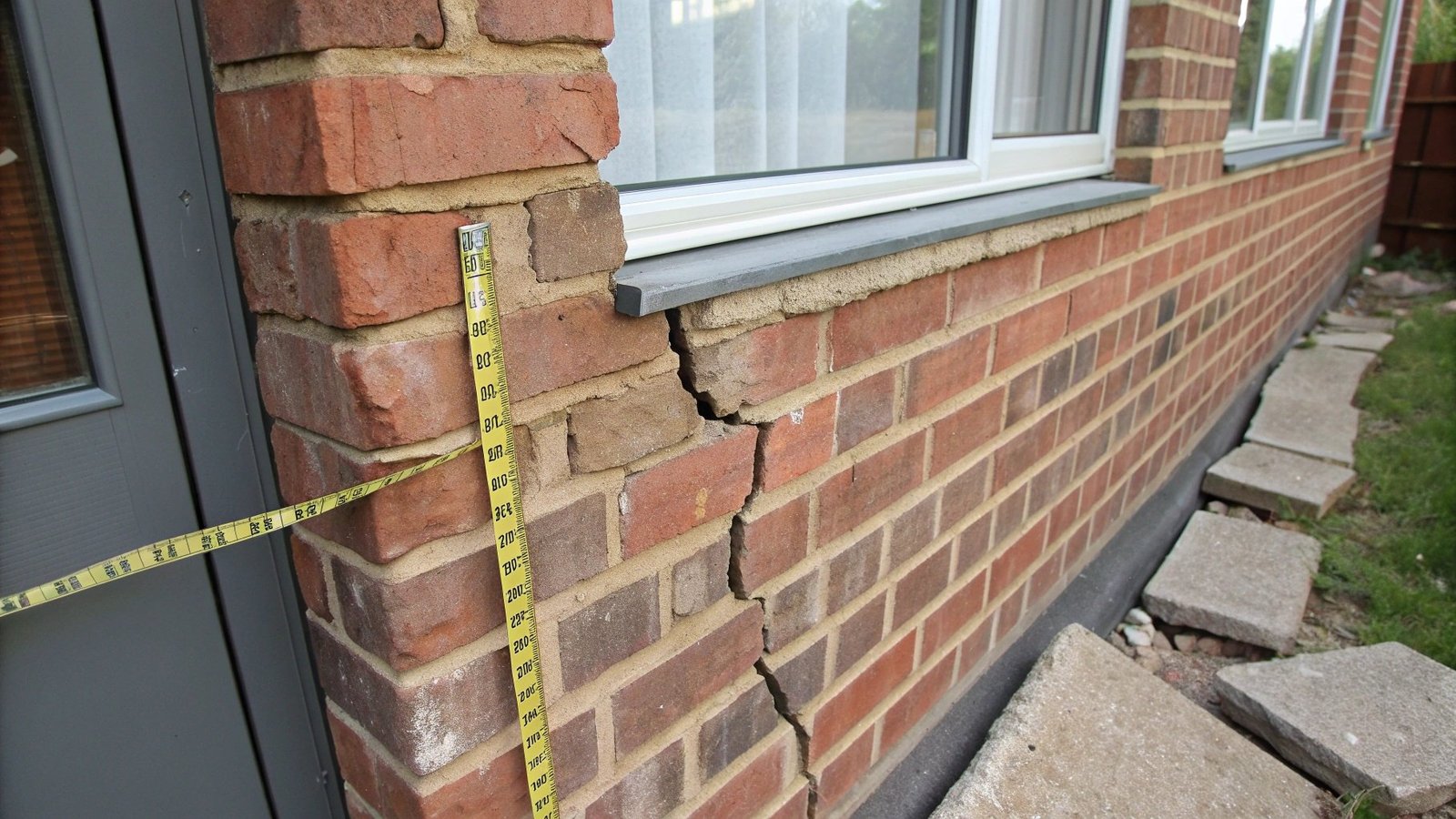
Subsidence is one of the most serious structural issues affecting UK properties, potentially costing tens of thousands to repair. As experienced Surbiton Surveyors, we help homeowners across Surrey and London identify subsidence early, understand its causes, and implement effective solutions to protect their most valuable asset.
What is Subsidence?
Surbiton Surveyors define subsidence as the downward movement of the ground beneath a building's foundations, causing the property to sink. This differs from settlement (normal movement after construction) and heave (upward ground movement).
Subsidence typically occurs when soil beneath foundations loses moisture and shrinks, when underground voids develop, or when soil is washed away. The result is uneven support for the building, leading to structural movement and cracking.
Common Causes of Subsidence in Surrey
During building surveys across Surrey and London, we identify several primary subsidence causes:
Clay Soil Shrinkage
Clay-rich soils, common in Surrey, expand when wet and shrink dramatically when dry. During prolonged dry periods or droughts, clay loses moisture and contracts, removing support from foundations. This is the most common subsidence cause in Southeast England.
Tree Root Damage
Large trees near properties extract significant moisture from soil, particularly in summer. Species like oak, willow, poplar, elm, and ash have extensive root systems and high water demands. Trees within a distance equal to their mature height from a property can potentially cause subsidence.
Leaking Drains
Damaged or leaking underground pipes wash away supporting soil beneath foundations. This type of subsidence can occur relatively quickly and often affects specific sections of a property near the drain defect.
Mining and Underground Works
Historic mining activities, natural caves, or underground workings can create voids that eventually collapse, causing sudden and severe subsidence. While less common in Surbiton, some Surrey areas have historical chalk or sand extraction.
Poor Construction
Inadequate foundations, particularly in older properties or extensions, may be insufficient for soil conditions, leading to gradual settlement that develops into subsidence.
Identifying Subsidence: Warning Signs
As chartered surveyors, we train homeowners to recognize potential subsidence indicators:
Crack Characteristics
Not all cracks indicate subsidence, but certain patterns are concerning:
- Diagonal cracks: Running at roughly 45-degree angles, particularly around doors and windows
- Wider than 3mm: Visible cracks wide enough to insert a 10p coin
- Tapered cracks: Wider at the top or bottom
- Internal and external correlation: Cracks appearing on both sides of walls in the same locations
- Stepped cracking: Following mortar lines in brickwork
- Progressive cracks: That worsen over time rather than remaining stable
Doors and Windows
- Doors and windows sticking in frames
- Gaps appearing around door and window frames
- Distorted frames preventing opening or closing
Other Warning Signs
- Leaning or bulging walls
- Wrinkled wallpaper or cracks in internal plaster
- Uneven or sloping floors
- Cracking in extensions where they meet the main house
- Gaps between walls and ceilings or floors
During property surveys in Surbiton, we photograph, measure, and monitor these indicators to determine if active subsidence is occurring.
Differential Diagnosis: Not All Cracks are Subsidence
Experienced Surbiton Surveyors distinguish subsidence from other movement causes:
Thermal Movement
Buildings expand and contract with temperature changes. Fine hairline cracks appearing seasonally are usually thermal movement, not subsidence.
Settlement
New buildings settle as soil compacts under their weight. This typically occurs within 10 years of construction and then stabilizes.
Historic Movement
Many Victorian and Edwardian properties show old cracks from long-ago movement that has now stabilized. These don't require treatment if currently inactive.
Heave
Opposite to subsidence—soil expanding and lifting foundations. Often occurs after trees are removed, allowing soil to rehydrate and swell.
Vibration Damage
Properties near railways or busy roads may develop cracks from long-term vibration rather than subsidence.
Professional Subsidence Investigation
When subsidence is suspected, Surbiton Surveyors conduct comprehensive investigations:
Initial Assessment
We examine all visible cracks, measuring widths, lengths, and orientations. We check for patterns consistent with subsidence and identify potential causes like nearby trees or drainage issues.
Monitoring
For suspected active subsidence, we install crack monitoring devices. These measure whether cracks are widening, seasonal (opening and closing with weather), or progressive. Monitoring typically runs for 6-12 months.
Site Investigation
Detailed investigations may include:
- Trial pits: Exposing foundations to check depths and condition
- Boreholes: Analyzing soil composition, moisture content, and underground conditions
- CCTV drain surveys: Inspecting underground drainage for leaks
- Tree surveys: Assessing species, distances, and water demands
- Level surveys: Measuring floor levels to determine extent of movement
Report and Recommendations
We produce detailed reports with photographs, measurements, analysis, and recommended actions, whether simple monitoring, minor repairs, or major underpinning.
Subsidence Repair Methods
Treatment depends on causes, severity, and ongoing activity:
Monitoring (Do Nothing)
If movement is historic or minimal, the most cost-effective approach is often monitoring to ensure stability before any expensive repairs.
Addressing the Cause
- Tree management: Pruning, crown reduction, or removal (requires planning consideration)
- Drain repairs: Relining or replacing defective pipes
- Improved drainage: Installing land drains to manage groundwater
Addressing the cause often stabilizes movement without foundation work.
Underpinning
The traditional solution involves excavating beneath existing foundations and extending them deeper to reach stable ground. Common methods include:
- Mass concrete underpinning: Traditional method using staged excavation and concrete pours
- Mini-piled underpinning: Smaller, less disruptive piles driven to stable strata
- Resin injection: Injecting expanding resin to consolidate and lift foundations
Underpinning costs typically range from £10,000-£50,000+ depending on extent and method.
Structural Repairs
After stabilizing movement, cosmetic repairs include:
- Crack stitching and helical bar installation
- Re-plastering and redecorating
- Rebuilding seriously damaged sections
Subsidence and Property Insurance
As property surveyors, we advise clients on insurance implications:
Making a Claim
Most buildings insurance covers subsidence (check your policy). Claims typically require:
- Professional surveyor's report
- Evidence of active movement
- Monitoring data
- Repair quotations
Insurers usually appoint their own surveyors and engineers to verify claims.
Excess Payments
Subsidence claims often have higher policy excesses (typically £1,000-£5,000). Check your policy carefully.
Future Insurability
Properties with subsidence history may face higher premiums or difficulty obtaining insurance. Successful stabilization and repair usually resolve this within a few years.
Buying a Property with Subsidence History
Surbiton Surveyors regularly advise purchasers considering properties with past subsidence:
Key Questions
- When did subsidence occur?
- What repairs were undertaken?
- Is there an engineer's certificate confirming successful repairs?
- Has monitoring confirmed stability?
- Does the property have insurance?
- What is the ongoing insurance premium?
Negotiating Price
Subsidence history typically reduces property values by 5-25%, depending on severity, repair quality, and time since stabilization. As chartered surveyors, we provide valuation advice reflecting subsidence history.
Mortgage Considerations
Lenders are cautious about subsidence-affected properties. They typically require:
- Engineer's certificates
- Evidence of insurance availability
- Structural guarantees
- Satisfactory specialist survey reports
Preventing Subsidence
While not all subsidence is preventable, Surbiton Surveyors recommend these protective measures:
Tree Management
- Don't plant large trees near properties (maintain distance equal to mature height)
- Regularly prune existing trees to reduce water demand
- Consider removing problematic species near foundations
- Obtain Tree Preservation Order information before work
Drainage Maintenance
- Regularly inspect and clean gutters and downpipes
- CCTV survey underground drains every 5-10 years
- Promptly repair any drainage defects
- Ensure surface water drains away from buildings
Foundation Protection
- Maintain consistent soil moisture levels
- Don't excavate near foundations without professional advice
- Ensure extensions have adequate foundations
- Install root barriers if planting near buildings
Regular Monitoring
- Inspect properties annually for new cracks
- Keep photographic records of any concerning cracks
- Act quickly if warning signs appear
- Commission professional surveys if concerned
Subsidence in Different Property Types
Victorian and Edwardian Properties
Older properties in Surbiton and Kingston often have shallow foundations (sometimes just 300-600mm deep) making them more vulnerable. However, many have survived 100+ years, suggesting stable conditions unless circumstances change (e.g., tree planting, climate change).
1930s Properties
Inter-war homes usually have slightly better foundations but may have been built during less regulated periods with variable foundation quality.
Modern Properties
Post-1970 properties typically have engineered foundations designed for local soil conditions. However, they're not immune—particularly if trees are planted nearby or drainage fails.
Climate Change and Subsidence Risk
As Surbiton Surveyors, we're increasingly concerned about climate change impacts:
- More frequent droughts: Extended dry periods increase clay shrinkage
- Extreme weather cycles: Alternating wet and dry conditions cause repeated soil expansion/contraction
- Increased subsidence claims: Insurance industry reports rising subsidence incidents
- Changing risk areas: Previously low-risk regions becoming more vulnerable
Proactive monitoring and maintenance become increasingly important in this changing climate.
Conclusion: Managing Subsidence Risk
Subsidence is serious but manageable with early detection, proper investigation, and appropriate treatment. Most subsidence cases stabilize and repair successfully, allowing properties to retain value and insurability.
The key is professional expertise. DIY diagnosis often leads to unnecessary anxiety or, worse, missed signs of genuine problems. If you notice concerning cracks or movement in your Surrey or London property, commission an experienced chartered surveyor for accurate assessment.
At Surbiton Surveyors, we provide comprehensive subsidence investigations, monitoring services, and repair recommendations. Our local knowledge of Surrey geology, building types, and common issues ensures accurate diagnosis and proportionate responses.
Don't let subsidence concerns cause sleepless nights. Contact us today for expert, independent advice on protecting your property investment.
Concerned About Subsidence?
Our experienced surveyors provide professional subsidence investigations and monitoring. Get peace of mind with expert assessment.