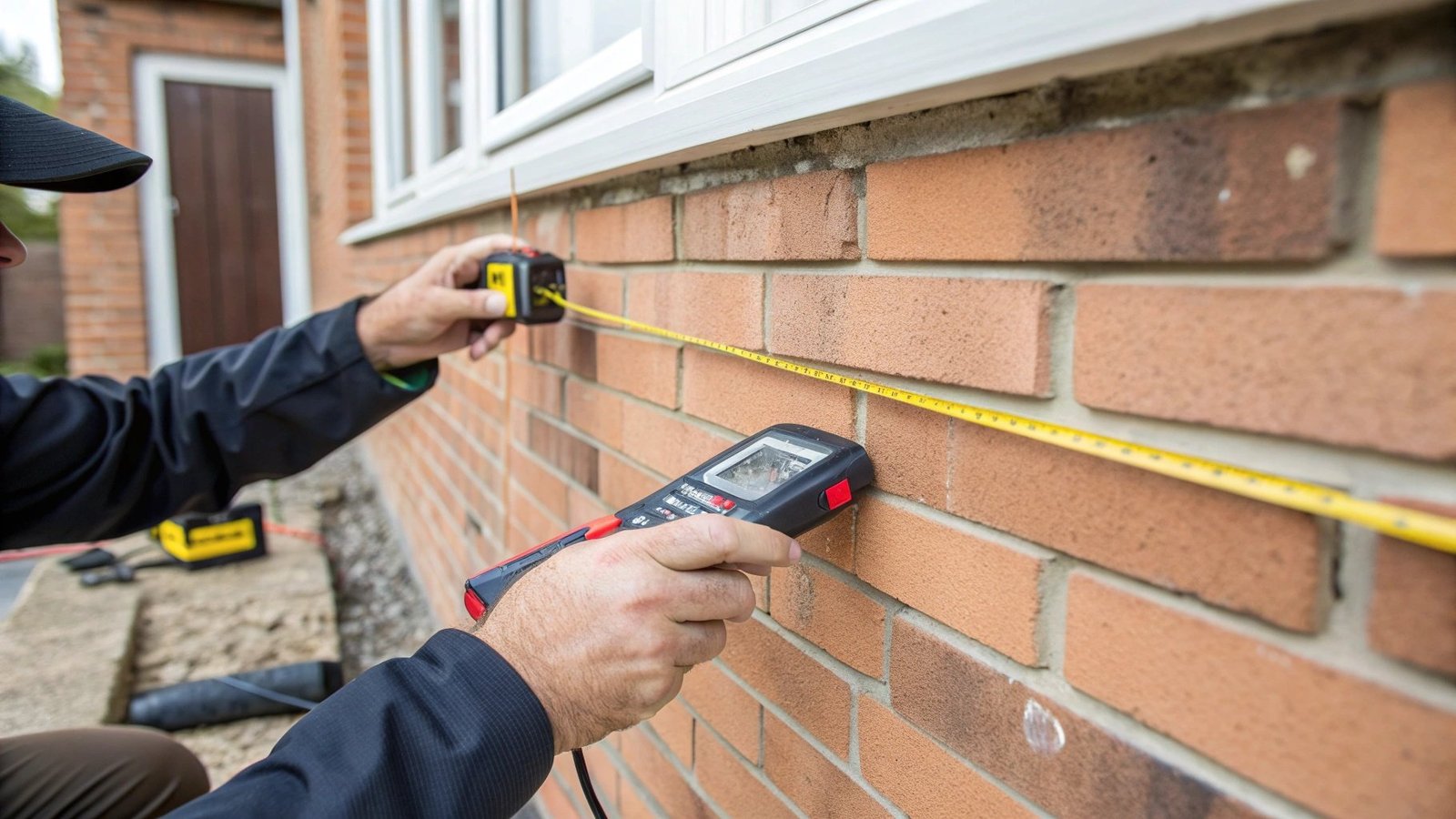
Damp is one of the most common issues identified during building surveys by Surbiton Surveyors. Understanding the three main types of damp—rising damp, penetrating damp, and condensation—is essential for every property owner in Surrey and London to protect their investment and family health.
Why Damp Matters to Homeowners in Surbiton
As experienced Surbiton Surveyors, we see damp-related problems in residential properties daily. Damp causes structural damage, health issues, and reduces property values. Early identification by qualified chartered surveyors prevents minor issues escalating into expensive repairs costing thousands of pounds.
The Three Types of Damp Explained
1. Rising Damp: Ground Moisture Moving Upward
Rising damp occurs when groundwater travels upward through porous building materials via capillary action. This affects ground floor walls, typically rising no more than one metre above floor level.
Key signs of rising damp include:
- Tide marks on walls at low levels (usually horizontal)
- White powdery deposits (efflorescence) on wall surfaces
- Peeling paint, wallpaper, or plaster at floor level
- Damp, musty odours in ground floor rooms
- Rotting skirting boards and floor timbers
- Salt damage to wall surfaces
During property surveys in Surbiton and Kingston, we use professional moisture meters to accurately measure water content. Rising damp typically results from failed damp-proof courses (DPC), bridged DPCs where external ground levels are too high, or absent DPCs in older properties built before 1875.
2. Penetrating Damp: External Water Ingress
Penetrating damp happens when rainwater enters buildings through external defects. Unlike rising damp, penetrating moisture can appear at any height and often creates damp patches that worsen during rainy weather.
Common indicators we identify during building surveys:
- Damp patches appearing or worsening after rainfall
- Water staining on walls, ceilings, or around windows
- Localized mould growth
- Bubbling or peeling paint and wallpaper
- Damaged or cracked external render
- Staining below window sills
As chartered surveyors, we commonly find penetrating damp caused by defective guttering, leaking roofs, damaged pointing, cracked render, gaps around windows and doors, and porous brickwork. Victorian and Georgian properties in Surrey with solid wall construction are particularly vulnerable.
3. Condensation Damp: The Most Common Problem
Condensation is the most frequent damp issue in UK homes. It occurs when warm, moisture-laden air meets cold surfaces, causing water vapour to condense into liquid droplets.
Typical condensation signs include:
- Water droplets on windows, especially in mornings
- Black mould on walls, particularly in corners
- Mould behind furniture positioned against external walls
- Black spots on window frames and bathroom tiles
- Musty smells in poorly ventilated rooms
- Streaming windows and wet walls
Condensation is exacerbated by poor ventilation, inadequate heating, and lifestyle factors like cooking, bathing, and drying clothes indoors. Modern properties with double glazing and good insulation can trap moisture if ventilation isn't sufficient.
Health Implications of Damp Properties
Surbiton Surveyors must inform clients about serious health risks associated with damp and mould:
- Respiratory problems: Asthma, allergies, and respiratory infections triggered by mould spores
- Skin conditions: Rashes, eczema, and dermatitis from mould contact
- Eye irritation: Redness, watering, and discomfort from airborne spores
- Immune system effects: Prolonged exposure may weaken immunity
- Mental health: Living in damp conditions affects wellbeing
Children, elderly people, and those with existing health conditions are most vulnerable. Identifying and resolving damp issues is a critical component of our building surveys.
Professional Damp Detection Methods
Our chartered building surveyors employ various professional techniques:
Electronic Moisture Meters
We use both pin-type (invasive) and scanning (non-invasive) moisture meters to measure water content in walls, floors, and timbers, building comprehensive moisture profiles.
Thermal Imaging Cameras
Infrared technology detects temperature variations revealing hidden moisture problems, insulation defects, and thermal bridging contributing to condensation.
Calcium Carbide Testing
For precise moisture measurement, calcium carbide testing provides accurate quantitative results essential for insurance claims and legal disputes.
Visual Inspection and Experience
Our experienced surveyors inspect external walls, roofs, guttering, ground levels, ventilation systems, and internal finishes to identify root causes.
Treating Rising Damp in Surrey Properties
Effective rising damp treatment typically involves:
- Installing new damp-proof course: Chemical injection DPC or physical membrane insertion
- Removing contaminated plaster: Salt-damaged materials must be replaced up to 1 metre
- Re-plastering with specialist renders: Using waterproof additives or sand/cement mixes
- Lowering external ground levels: Ensuring ground is 150mm+ below DPC
- Improving drainage: Installing or repairing external land drains
Treatment costs vary from £2,000-£7,000+ depending on extent. Surbiton Surveyors recommend obtaining multiple quotes from reputable specialists with insurance-backed guarantees.
Addressing Penetrating Damp
Solutions depend on water entry points:
- Roof repairs: Replacing damaged tiles, repairing flashings, clearing gutters
- Repointing masonry: Using appropriate lime or cement mortars for wall type
- Render repairs or replacement: Patching or complete re-rendering with breathable materials
- Window and door sealing: Replacing failed sealants and ensuring proper weather seals
- Gutter maintenance: Regular cleaning prevents overflow and wall saturation
Controlling Condensation in Residential Properties
Condensation management focuses on the moisture-ventilation-heating triangle:
Improving Ventilation
- Install trickle vents in windows
- Use extraction fans in kitchens and bathrooms
- Install passive stack ventilation systems
- Open windows regularly, even in winter
- Ensure air bricks aren't blocked
Increasing Heating
- Maintain consistent temperatures throughout properties
- Heat all rooms, not just living areas
- Avoid large temperature fluctuations
- Consider upgrading heating systems
Reducing Moisture Production
- Vent tumble dryers externally
- Use extraction when cooking and bathing
- Dry clothes outdoors or in well-ventilated spaces
- Don't overfill wardrobes and cupboards
- Pull furniture away from external walls
Improving Insulation
- Insulate lofts and walls (with appropriate breathable materials)
- Consider secondary glazing for single-glazed windows
- Address cold spots and thermal bridges
- Use appropriate insulation for property type
When to Commission a Professional Damp Survey
We recommend professional damp surveys from Surbiton Surveyors when:
- Purchasing any property, especially older buildings
- Noticing persistent damp patches or mould growth
- Detecting musty odours in your home
- Planning renovations or extensions
- Experiencing unexplained health issues
- Making insurance claims for water damage
- Selling a property with known damp history
Comprehensive building surveys identify all moisture problems, determine causes, and recommend appropriate remedial works with realistic cost estimates.
Damp in Period Properties Across Surrey
Victorian, Edwardian, and Georgian properties require special consideration:
Solid Wall Construction
Pre-1920s properties typically have solid walls without cavities. These are more susceptible to penetrating damp but allow walls to "breathe," managing moisture naturally if maintained correctly with appropriate materials.
Lime-Based Materials
Period properties were built using breathable lime mortars and plasters. Modern cement-based products trap moisture, creating problems. Our chartered surveyors recommend lime-based repairs maintaining breathability.
Absence of Damp-Proof Courses
Many older properties lack DPCs. However, if they've survived 100+ years without major damp problems, existing construction may function adequately. Unnecessary damp-proofing sometimes causes more harm than good.
Common Damp-Proofing Misconceptions
Myth: All Ground Floor Damp is Rising Damp
Reality: Many cases diagnosed as "rising damp" are actually penetrating damp, condensation, or plumbing leaks. Proper investigation by qualified surveyors is essential.
Myth: Damp-Proof Paint Solves Problems
Reality: These products temporarily mask symptoms without addressing causes. Moisture finds alternative escape routes, often causing hidden damage.
Myth: All Properties Need Chemical DPC Injection
Reality: Many older properties function well without modern DPCs. Treatment should only follow thorough investigation of actual problems.
Insurance and Damp Issues
Understanding insurance coverage for damp is crucial:
- Generally not covered: Gradual deterioration, maintenance issues, rising damp, condensation
- May be covered: Sudden water damage from storms, burst pipes, roof damage
- Requires disclosure: Known damp issues must be declared when selling properties
- Affects premiums: Properties with damp history may face higher insurance costs
Preventing Damp in Your Surbiton Property
Surbiton Surveyors recommend these preventive measures:
Regular Maintenance
- Clean gutters and downpipes twice yearly
- Inspect roofs annually for damage
- Check pointing and render for cracks
- Ensure ground levels haven't risen against walls
- Service and clear air bricks regularly
- Monitor moisture levels in vulnerable areas
Lifestyle Habits
- Open windows regularly for ventilation
- Use extraction fans when cooking and bathing
- Dry clothes outdoors when possible
- Maintain consistent heating
- Wipe condensation from windows daily
The Surbiton Surveyors Approach
When you commission damp surveys from our chartered surveyors, you receive:
- Thorough investigation: We identify all moisture problems and root causes
- Scientific testing: Moisture meters, thermal imaging, and analysis
- Honest recommendations: No over-specification or unnecessary treatments
- Detailed reporting: Clear photographs, readings, and prioritized actions
- Cost estimates: Realistic budgets for remedial works
- Independent advice: No ties to damp-proofing contractors
Conclusion: Taking Control of Damp Issues
Damp doesn't have to be inevitable in UK residential properties. With proper understanding, regular maintenance, and professional advice from experienced Surbiton Surveyors, these issues can be prevented, identified early, and treated effectively.
Whether you're buying a property in Surbiton, concerned about existing damp, or planning renovations, professional survey advice is invaluable. Our chartered building surveyors have decades of combined experience identifying and resolving moisture issues in properties across Surrey, Kingston, and London.
Don't let damp compromise your property or health. Contact Surbiton Surveyors today for expert, independent damp assessment and solutions.
Need Professional Damp Assessment?
Our chartered surveyors provide comprehensive damp investigations with honest, independent advice tailored to your property.