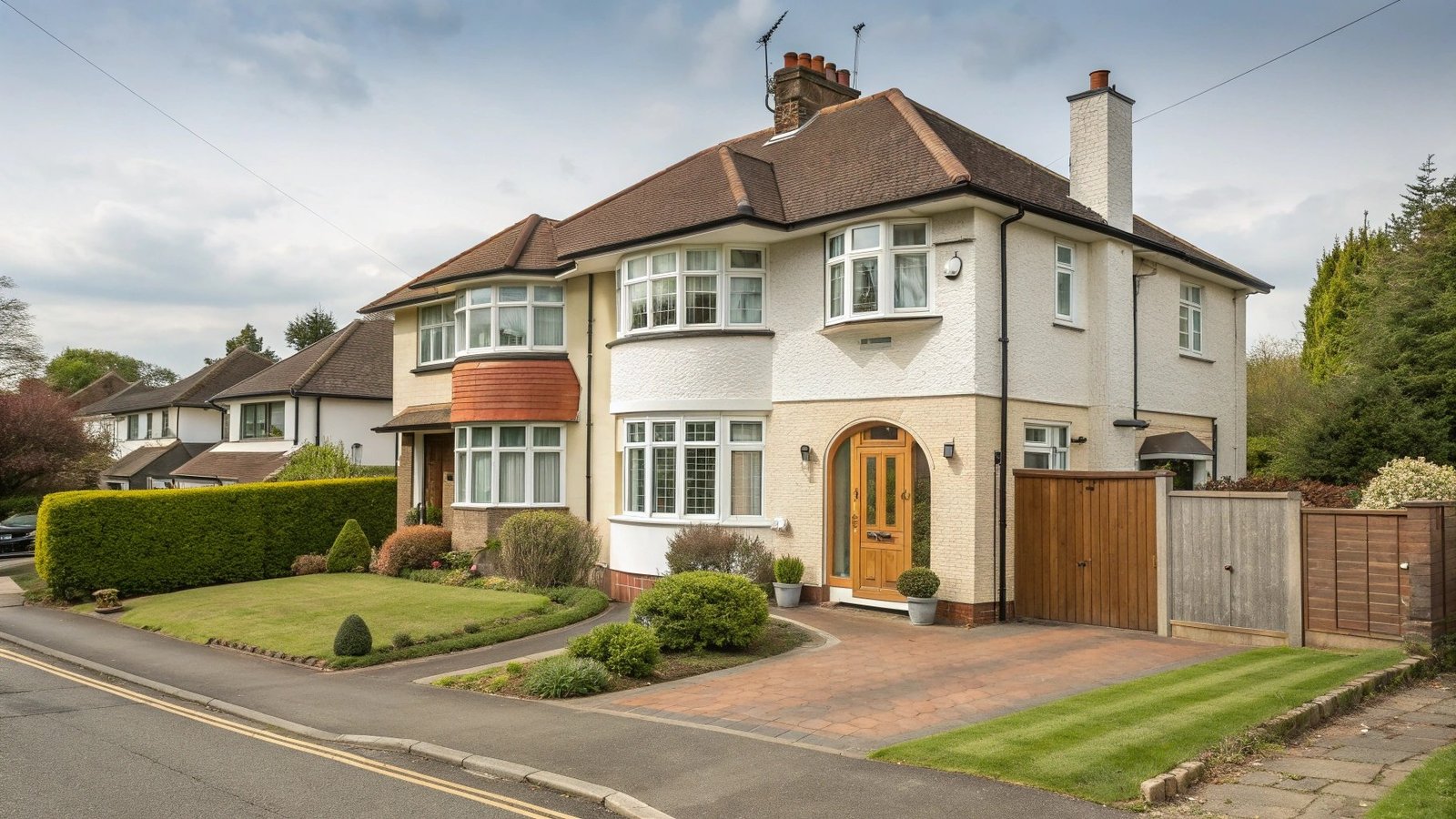
1930s semi-detached houses are among the most popular properties in Surbiton, Kingston, and across Surrey. As experienced Surbiton Surveyors, we conduct building surveys on these inter-war homes weekly, identifying common defects that buyers should understand before purchasing.
Why 1930s Properties Are Popular
Chartered surveyors recognize that 1930s properties offer attractive features:
- Generous room sizes compared to modern homes
- Period character with bay windows, original features
- Established gardens (front and rear)
- Better construction quality than many post-war properties
- Good locations in mature neighborhoods
- Extension potential (side, rear, loft)
Typical 1930s Construction Methods
Understanding construction helps identify likely defects during building surveys:
Cavity Wall Construction
1930s properties were among the first to use cavity walls (two brick skins with air gap). This improved insulation and damp resistance compared to earlier solid wall construction.
Concrete Tile Roofs
Many used concrete interlocking tiles rather than slate, offering economical roofing that typically lasts 50-60 years.
Suspended Timber Floors
Ground floors used timber joists on sleeper walls with underfloor ventilation via air bricks.
Steel Windows
Crittall-style metal-framed windows were standard, though many have since been replaced.
Common Defects Found by Surbiton Surveyors
1. Cavity Wall Tie Corrosion
Original metal wall ties connecting inner and outer brick skins corrode after 70-90 years, causing:
- Horizontal cracking in external walls
- Bulging brickwork
- Structural instability
Repair costs: Wall tie replacement: £1,500-£3,000 for typical semi-detached.
2. Render Defects
Many 1930s properties have rendered upper floors. Common problems:
- Cracking and spalling render
- Blown (detached) render sections
- Water penetration behind failed render
- Inappropriate cement-based repairs
Repair costs: Re-rendering: £40-£80 per m².
3. Concrete Tile Roof Issues
After 90+ years, concrete tiles show:
- Surface erosion reducing water-shedding ability
- Nail fixing corrosion causing slippage
- Moss growth indicating surface degradation
- Ridge tile bedding failures
Replacement costs: £6,000-£10,000 for full re-roofing.
4. Chimneys and Fireplaces
Original chimneys often require attention:
- Defective pointing allowing water penetration
- Leaning stacks
- Removed chimney breasts (check structural support)
- Failed flue linings
5. Window Replacement Issues
Where original steel windows have been replaced, building surveys often identify:
- Poor-quality UPVC installations
- Inadequate lintels over openings
- Failed seals and water penetration
- Inappropriate double glazing not matching property character
6. Flat Roof Extensions and Porches
Many 1930s properties have been extended. Common problems:
- Felt flat roofs beyond serviceable life
- Inadequate foundations for extensions
- Cracking where extensions meet main house
- Poor-quality workmanship
7. Damp Issues
Surbiton Surveyors regularly find:
- Bridged cavity walls (mortar droppings or debris)
- Failed or absent DPC
- Penetrating damp from defective pointing or render
- Inadequate sub-floor ventilation
8. Electrical and Plumbing
Original services require complete replacement:
- Outdated electrical wiring (often rubber insulated)
- Lead water pipes requiring replacement
- Old heating systems (back boilers, storage heaters)
- Asbestos in ceiling coatings or insulation
Advantages of 1930s Construction
Despite age-related defects, 1930s properties have strengths:
- Cavity wall construction: Better thermal performance than pre-1920s solid walls
- Adequate foundations: Generally more substantial than earlier properties
- Room sizes: Generous compared to modern homes
- Build quality: Solid construction using traditional methods
- Modification potential: Easier to extend and improve than listed buildings
What to Budget for When Buying 1930s Properties
As chartered surveyors, we advise clients to budget for typical improvements:
Essential Updates
- Rewiring: £4,000-£7,000
- New heating system: £3,500-£6,000
- Kitchen replacement: £5,000-£20,000+
- Bathroom modernization: £3,000-£8,000
Common Repairs
- Roof repairs/replacement: £6,000-£10,000
- Window replacement: £5,000-£12,000 (heritage-style)
- Damp-proofing: £2,000-£5,000
- Repointing/render repairs: £2,000-£6,000
Energy Efficiency Improvements
- Cavity wall insulation: £500-£1,500
- Loft insulation (upgrade): £300-£800
- Double glazing: £5,000-£12,000
Modernizing 1930s Properties
Surbiton Surveyors advise on sympathetic improvements:
Popular Modifications
- Loft conversions: Adding bedroom and bathroom
- Side extensions: Filling gap between semi-detached houses
- Rear extensions: Open-plan kitchen-dining spaces
- Garage conversions: Additional living space
Maintaining Period Character
- Retain original bay windows where possible
- Use heritage-style replacement windows (not UPVC)
- Preserve original internal doors and features
- Maintain architectural proportions
- Use appropriate external materials matching existing
Survey Recommendations for 1930s Properties
We strongly recommend Level 3 Building Surveys because:
- Properties are 90+ years old requiring detailed assessment
- Multiple defects are likely
- Renovation costs can be substantial
- Understanding building evolution helps plan improvements
- Identification of non-standard construction or alterations
Our building surveys provide comprehensive reports with photographs, defect descriptions, repair recommendations, and cost estimates.
Mortgage and Insurance Considerations
Lenders and insurers have specific requirements for 1930s properties:
- Surveys identifying significant defects may affect mortgage offers
- Non-standard construction (e.g., steel-framed, concrete) requires specialist valuation
- Insurance premiums may be higher for properties requiring repairs
- Listed building status (rare for 1930s) affects mortgageability
Key Inspection Points for 1930s Properties
During property surveys in Surbiton and Surrey, we focus on:
External Inspection
- Cavity wall tie condition
- Render cracks and detachment
- Concrete roof tile deterioration
- Chimney stack stability
- Window frame condition
- Damp-proof course effectiveness
Internal Inspection
- Electrical system age and safety
- Plumbing condition (lead pipes)
- Heating system efficiency
- Floor structure and ventilation
- Evidence of damp or condensation
- Structural alterations and their adequacy
Roof Space Inspection
- Roof structure condition
- Insulation levels
- Ventilation adequacy
- Evidence of leaks or rot
- Loft conversion standards (if present)
Energy Efficiency in 1930s Properties
1930s homes typically have poor energy efficiency ratings. Chartered surveyors recommend:
Cost-Effective Improvements
- Loft insulation: Quick payback period
- Cavity wall insulation: Suitable for most 1930s properties
- Modern boiler: Significant running cost savings
- Double glazing: Reduces heat loss and noise
- Draught-proofing: Simple but effective
Potential EPC Rating Improvements
Typical 1930s properties rate D or E. With improvements, ratings of C are achievable, reducing:
- Annual heating costs
- Carbon footprint
- Property running expenses
Case Study: 1930s Semi in Surbiton
Recent survey findings for a typical property:
- Roof: Concrete tiles with 10-15 years remaining life
- Walls: Minor cavity tie corrosion, monitoring recommended
- Windows: Mix of original steel and replacement UPVC
- Electrics: Outdated requiring full rewire (£5,500)
- Heating: 20-year-old boiler nearing replacement
- Damp: Minor penetrating damp from render cracks (£1,200)
Total immediate repairs: £6,700. Buyers negotiated £8,000 reduction accounting for future roof replacement.
Frequently Asked Questions
Are 1930s properties a good investment?
Yes, with proper survey information and realistic budgeting. They offer good space, established locations, and modification potential. However, expect ongoing maintenance and eventual major works (roof, rewiring).
How long will a 1930s property last?
With proper maintenance, indefinitely. The solid construction and cavity walls are durable. Regular upkeep prevents deterioration.
Should I buy a 1930s property with original features?
Original features add character but may need restoration. Budget for window repairs, electrical upgrades, and modernization while retaining period charm.
What's the biggest concern with 1930s properties?
Age-related defects are inevitable. Key concerns include roof condition, electrical systems, and cavity wall tie corrosion. Professional surveys identify issues before purchase.
Conclusion: Making Informed Decisions
1930s properties across Surbiton and Surrey offer excellent value, character, and potential. However, their age means defects are inevitable. Professional building surveys from experienced Surbiton Surveyors identify all issues, enabling realistic budgeting and informed negotiations.
Don't let age-related defects deter you—with proper survey information and realistic expectations, 1930s properties make fantastic family homes. Contact our chartered surveyors today for comprehensive building surveys tailored to inter-war properties.
Buying a 1930s Property?
Our surveyors specialize in inter-war properties. Get comprehensive building surveys identifying all defects and repair costs.